
Criminal Cases in the Greene County Courts
Greene County does not divide felony and misdemeanor work between separate local courts. The county component of the Illinois Circuit Court, within the Seventh Judicial Circuit, hears both classes along with traffic, juvenile, and ordinance cases. A city ticket from Carrollton, White Hall, or Roodhouse can therefore lead to the same circuit-court system. No separate municipal criminal docket was identified.
The Circuit Clerk keeps the numbered prosecution file, attends court, and accounts for money received or paid out. The file begins when the State's Attorney files a complaint or information, or when a grand jury returns an indictment. That filing can differ from the charge stated at arrest. Ask for the court document when the precise charge matters, because a sheriff report and a prosecutor's pleading record different stages.
One Greene Circuit Court
“County court” and “municipal court” are easy labels to apply, but neither describes Greene's criminal trial structure. Illinois Circuit Court has original jurisdiction here. The county courthouse in Carrollton is the records center for state-law prosecutions, regardless of whether the arrest began with the sheriff, a city police officer, or Illinois State Police.
The Greene County State's Attorney and Public Defender also work from the courthouse. Their roles are not custodial substitutes for the clerk. The prosecutor makes filing decisions, defense counsel represents eligible accused people, and the clerk maintains the public case file.
The Court Specialist has a separate scheduling number, 217-942-6731. Use that line for local court-date scheduling, not as a substitute for a records order. When a docket and a verbal date appear to conflict, confirm the current schedule with the proper court contact and keep the full case number at hand.
How to Search Case Records
Begin with the official local route to Judici Greene County Public Access. Judici is a vendor service linked by Greene County and Illinois Courts, not a state-owned database. Its FAQ indicates Greene criminal and civil information is current from 1996. Basic public case access is free, though some document or subscriber functions are gated.
- Open Greene County Public Access and confirm that Greene County is selected.
- Enter the person's last name first and then first name, or use the complete case number.
- Complete the humanity check if it appears, then select “Search.”
- Open each plausible result and compare its case number, type, filing date, parties, and status.
- Give the clerk the full case number when requesting a docket, charge, disposition, sentence, or certification.
| Field Label | Type | Required | Notes |
|---|---|---|---|
| Court/County | Selection | Yes | Select Greene County Public Access |
| Person Name | Text | Alternative | Use last name first, then first name |
| Case Number | Text | Alternative | Preserve all numbers and letters |
| Humanity verification | Challenge | Conditional | May appear before results |
| Search | Button | Yes | Submits the selected query |
Greene Docket Humanity Check
A failed automated visit does not prove that the docket is closed. Judici may place a humanity or CAPTCHA challenge between a reader and the search controls. Retry in a normal browser, check the county selection, or use the clerk's counter if the challenge persists. Do not invent fields hidden behind the challenge.
The Judici public-access source shows the service used for Greene case searches.
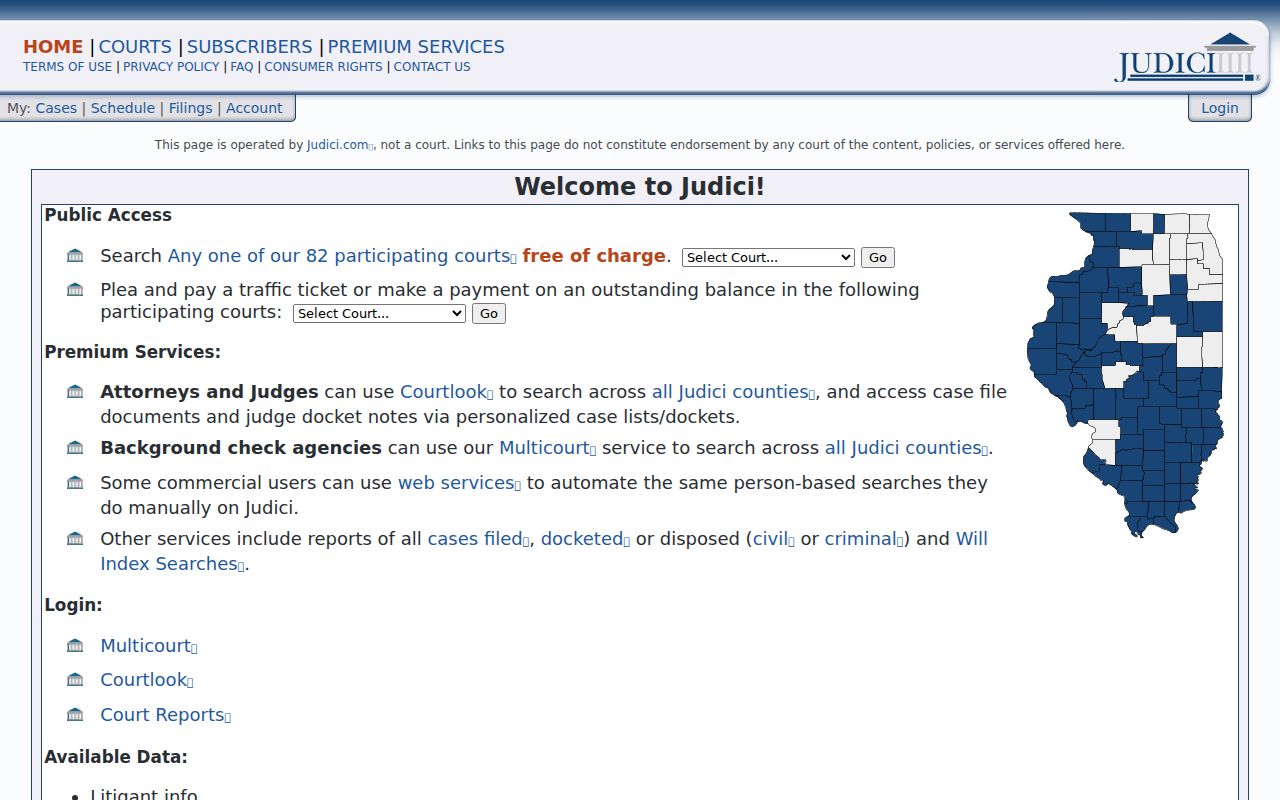
The portal image reinforces the practical split: search online for a likely docket, then rely on the clerk for the official document and certification.
A name search also needs care in a small county. People may share a surname, and the online view can suppress a minor's case even when the minor was prosecuted as an adult because date-of-birth limits still apply. Compare the case type, filing date, attorneys, and event history without assuming that a similar name identifies the right person. Once a likely case is found, record every digit and letter of its number before calling the clerk.
What the Case File Shows
A public case file records a prosecution as it changes over time. It may contain the filed charge, party and lawyer entries, hearing events, orders, a plea or verdict, financial entries, disposition, sentence, and warrant activity made part of the case. Document availability varies online, so the docket should be treated as a map to the file.
| Case Number & Court | Identifies the Greene Circuit Court file, type, and filing sequence. |
|---|---|
| Charging Document | Shows the complaint, information, or public indictment actually filed. |
| Docket Entries | Chronological appearances, motions, hearings, orders, pleas, and rulings. |
| Hearing Dates | Dates entered by the court; confirm schedules through the proper court contact. |
| Disposition & Judgment | Records dismissal, acquittal, conviction, supervision, or another outcome. |
| Sentence & Conditions | May state custody, probation, conditional discharge, restitution, and assessments. |
Pre-1996 Greene Court Files
Judici's Greene coverage begins in 1996. An older case therefore calls for a clerk search rather than repeated name queries. The same is true when a public document is absent, a docket is incomplete, or a certified disposition is required. Supply the full name, estimated year, and complete case number whenever available.
Greene County Circuit Clerk
519 N. Main St.
Carrollton, IL 62016
217-942-3421
Monday through Friday, 8:00 a.m. to 4:00 p.m.
Ask separately for the docket sheet, charging instrument, disposition order, sentencing order, and a certified copy. Greene does not publish its local search, copy, or certification prices, so confirm cost before ordering. Court records follow clerk and court-access procedures; FOIA is not the primary route to judicial files.
A docket printout and a certified disposition serve different needs. The docket is a running event list. A disposition order states how the charge ended, while a sentencing order records the consequence after conviction. Certification is the clerk's formal assurance that a copy matches the court record. Tell staff which one is needed instead of requesting an undefined “background check.”
Greene Courthouse Record Access
The Circuit Clerk is on the first floor of the courthouse. Public amenities include a copier, printer, internet access, digital recording, and a second-floor e-filing kiosk and law library. Free street parking surrounds the building. These resources can help when a document is public but not available through the remote docket.
Cell phones are permitted under current counter guidance, but alarms must be silenced. Courtroom clothing rules bar pajamas, hats, and garments with inappropriate language. A person who needs an accommodation may contact the courthouse disability coordinator through the clerk's number. The county's web accommodation request asks for first name, last name, email address, phone, and the accommodation requested.
Public inspection does not erase record restrictions. Clerk staff can provide public documents and explain ordering steps, but they cannot open an impounded, confidential, sealed, or expunged file to an unauthorized requester.
Greene's older physical records also matter for historical research. Illinois Archives holds sheriff jail registers dating from 1886 through 1972, but those custody registers are not the same collection as Circuit Court prosecution files. Start with the clerk for the case and use the archive only when the research question concerns its historical holdings.
Stages of a Criminal Case
An arrest or summons may start the process, but the court file starts with a prosecutor's complaint or information, or a grand-jury indictment. At arraignment the charge is stated and a plea is taken. Discovery and motions follow. The matter may end by negotiated plea, dismissal, trial verdict, or another lawful disposition. A conviction then leads to sentence, and an appeal may follow.
Case flow: Charges Filed › Arraignment › Pretrial › Plea or Trial › Disposition › Sentencing
These stages explain why arrest, filing, and conviction labels can differ. “Nolle prosequi” means the prosecutor formally stopped pursuing a charge. Court supervision can end without a conviction after successful completion. A guilty judgment plus sentence is a conviction.
Greene Cases Across Three Systems
Each system answers a different question. Judici is the Greene trial-court docket route. Illinois State Police UCIA supplies public Illinois conviction information, not the complete court file or a full nonconviction transcript. PACER holds federal prosecution dockets for Greene County, which lies in the Central District of Illinois's Springfield Division.
The separate re:SearchIL service concerns e-filed document access and should not be called a complete statewide public criminal-case search. Availability, registration, and document charges differ from ordinary docket access.
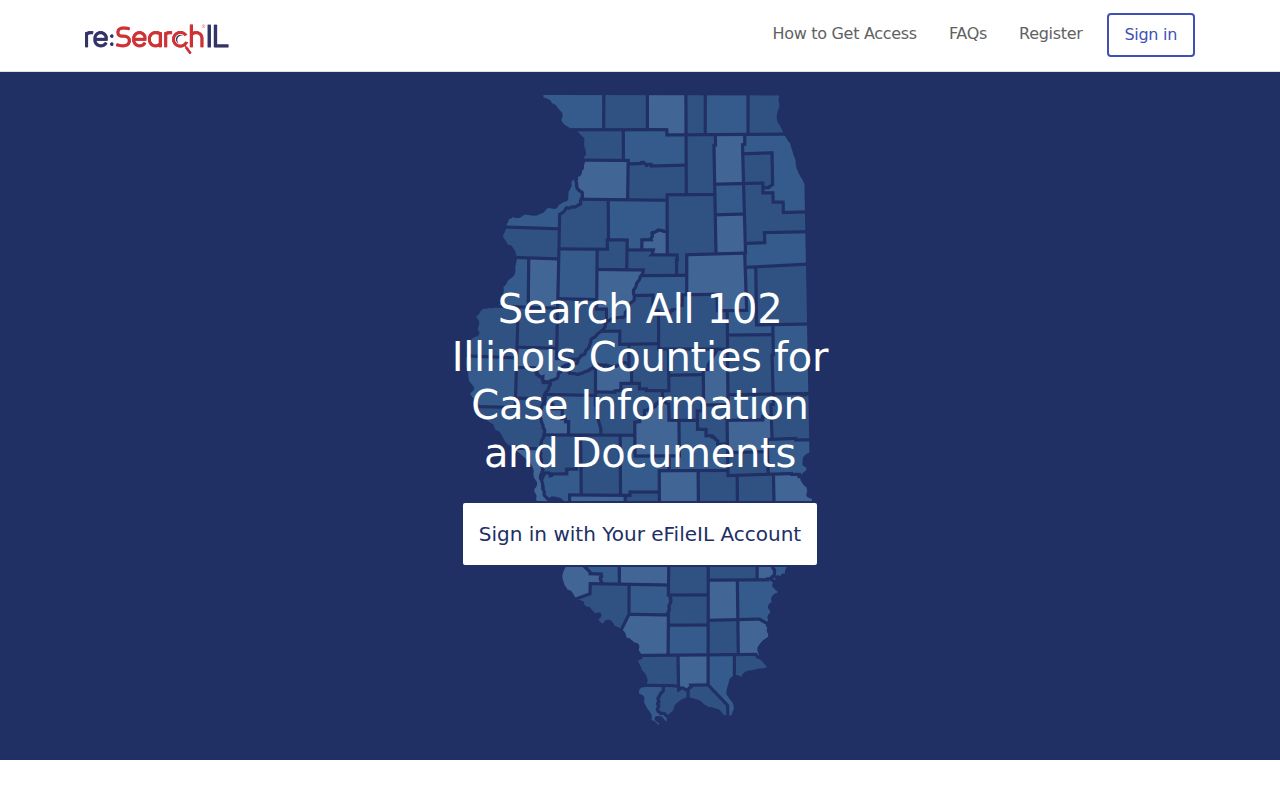
The service image helps distinguish document access from Greene's primary name-and-case-number route on Judici.
For a dependable self-check, compare like with like. Use the arresting agency for its report, the Circuit Clerk for the prosecution and entered disposition, and ISP Access and Review for the arrest cycles reported to the state. A public UCIA response is conviction-only and may rely on submitted demographics, so it should not be described as a complete fingerprint-verified history.
Federal records take another path. Greene County federal cases belong to the Springfield Division of the Central District of Illinois, not the Southern District. PACER provides the docket and filed public federal documents. The Bureau of Prisons locator answers custody questions, while PACER explains the prosecution. Neither source should be mixed into a Judici result as though all three share one county case number.
Access & Restrictions
Illinois court policy classifies records as Public, Impounded, Confidential, Sealed, or Expunged. Public access is presumed unless a law, rule, policy, or order restricts it. Juvenile, adoption, sealed, expunged, and impounded matters are excluded from ordinary Judici results. Victim, minor, financial, and private identifying details may also be withheld or redacted.
Illinois Supreme Court rules govern court-record access. The Criminal Identification Act governs adult expungement and sealing, while 705 ILCS 405/5-923 addresses juvenile expungement.
A missing online result can mean spelling, timing, pre-1996 coverage, date-of-birth restrictions, or a lawful access limit. It does not prove that no case exists. Ask the clerk whether a public file can be inspected during office hours, but do not expect staff to disclose a restricted record merely because the request is made in person.
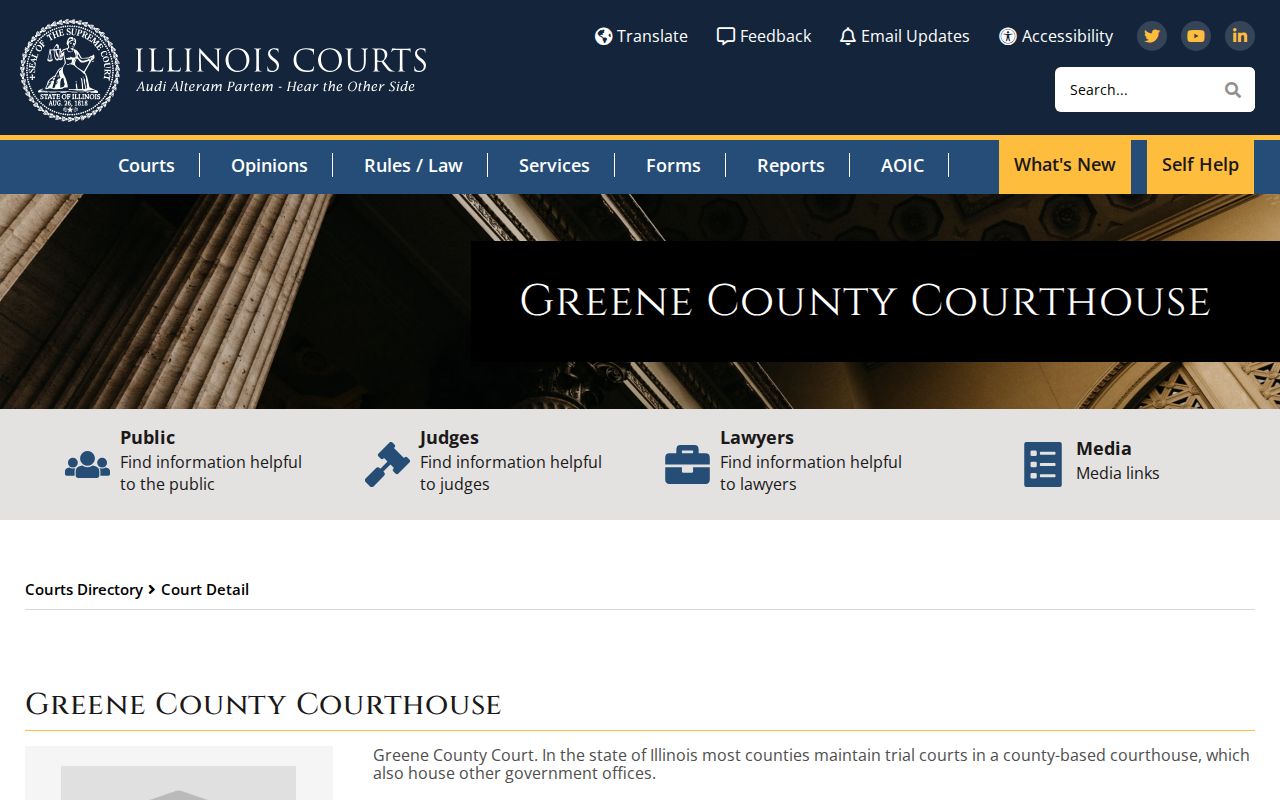
The official courthouse directory confirms the local court and clerk contact that backs up online access.